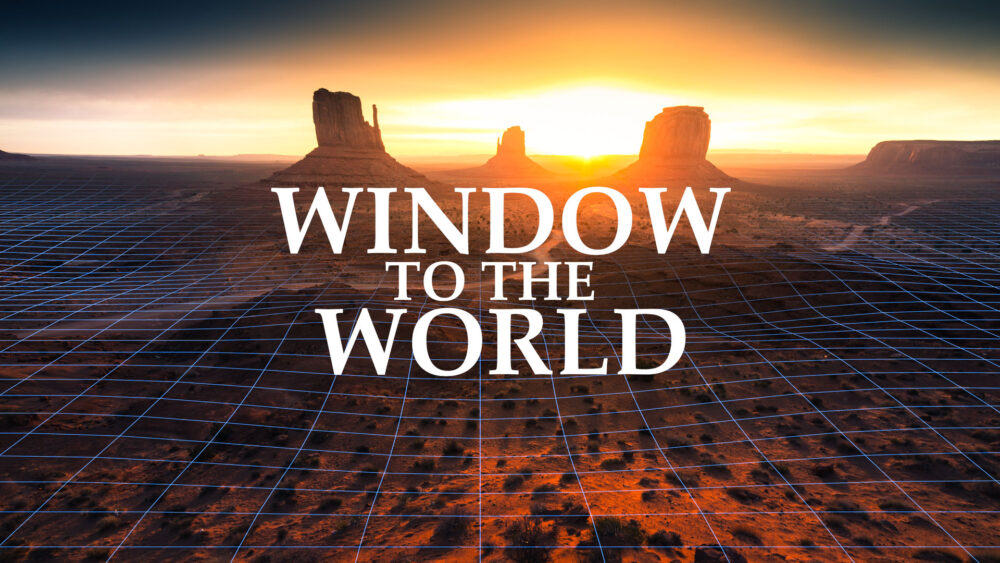
Exactly ten years ago, I decided to make a virtual reality application. I did not know Unity. I did not know C#. I learned enough of both in approximately two weeks and built Window to the World—to the best of my knowledge, the first Romanian VR application released on a public app store. The application is still listed on the Meta Store: https://www.meta.com/experiences/window-to-the-world/977682772321493/ But the project did not begin with VR. It began years earlier with photography and a simple frustration: a photograph could preserve light, colour, composition and detail, but it could not fully preserve the physical sensation of being there.
Photography Without a Drone
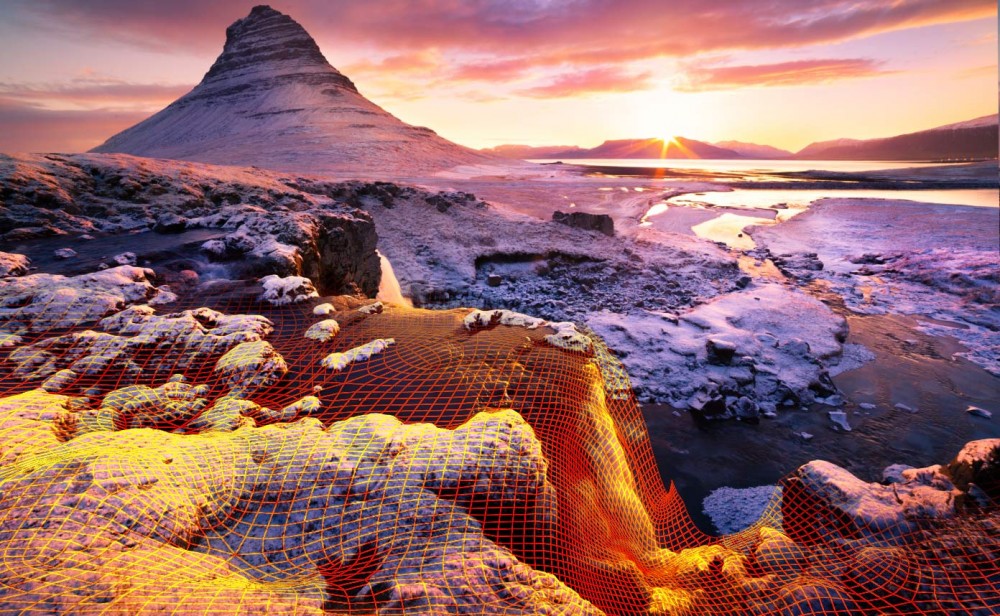
In 2013, I started experimenting with ways of giving my photographs depth and movement. I did not own a drone, and consumer drones were not yet ordinary photographic tools. If I wanted a camera movement through one of my landscapes, I could not simply return to Iceland, France or Bulgaria and fly through the scene. So I tried to reconstruct that movement from the photograph itself. I separated the images into elements, recreated the areas hidden behind foreground objects, built approximate geometry in 3ds Max, projected the original photographs onto it and added reflections, displacement, animated water and camera movement. It was not the usual two-dimensional parallax effect made from a few flat layers. The photographs became limited three-dimensional environments. They still worked only within a restricted range of movement, but inside that range the camera existed in something closer to an actual space. I documented the process here: https://aurelm.com/2013/12/15/fernweh-3d-parallax-photography-tutorial/
DYSTALGIA lets you travel infinitely deeper into an image while preserving the meaning of the original scene.
Traditional upscalers enlarge existing pixels. DYSTALGIA does something fundamentally different: it studies the selected crop together with the complete original image, understands their semantic relationship, and generates a plausible new layer of visual detail.
The result can become the starting point for another crop, another generation, and another zoom. This process can continue indefinitely.
It is not just image upscaling. It is context-aware exploration through latent space.
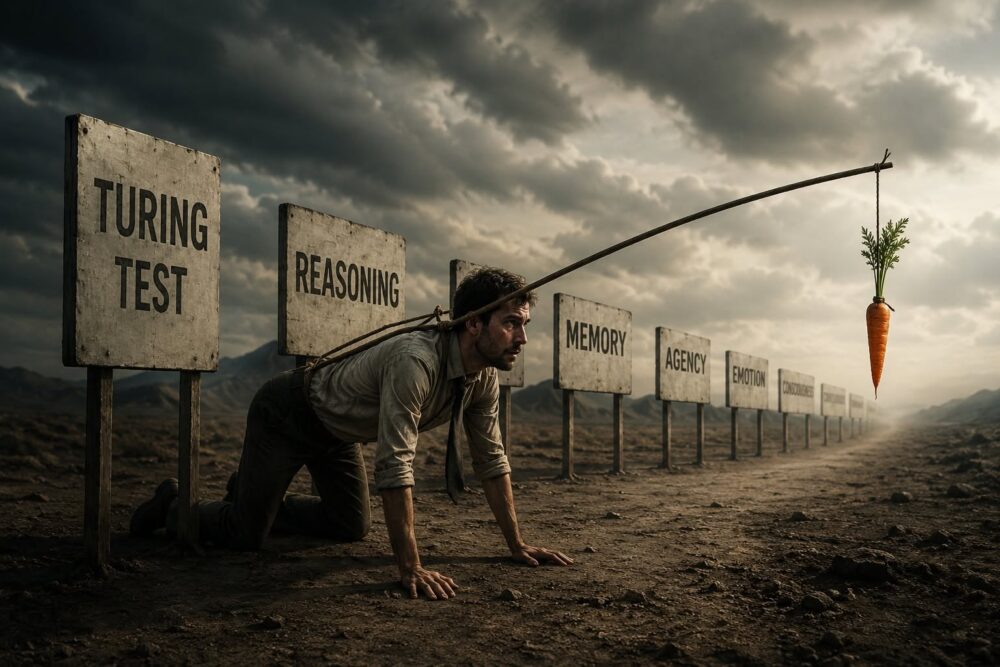
Ani la rand ne-am spus o poveste foarte clara. “Cand un AI va putea purta o conversatie imposibil de distins de cea a unui om, atunci vom fi ajuns la ceva cu adevarat important.” Acesta era Testul Turing. Nu era un meme. Era unul dintre fundamentele domeniului.
Apoi am ajuns acolo.
Si, aproape instantaneu, criteriul n-a mai contat. Nu pentru ca fusese demonstrat fals, ci pentru ca nu ne-a convenit rezultatul.
Am mutat borna.
“Nu, trebuie sa rationeze.” A inceput sa rationeze.
“Nu, trebuie sa aiba memorie.” Acum are.
“Nu, trebuie sa fie autonom.” Au aparut agenti autonomi.
“Nu, trebuie sa inteleaga.” “Nu, trebuie sa aiba emotii.” “Nu, trebuie sa aiba constiinta.” “Nu, trebuie sa aiba experienta subiectiva.”
We’ve had infinite zooms, recursive img2img, outpainting and endless upscaling for years. They all eventually hit the same wall: the deeper you zoom, the less the model understands what it is looking at. It stops seeing an eagle’s eye and starts seeing a brown circle with random textures. Consistency slowly disappears and the generated details become generic noise.
The problem isn’t image quality.
The problem is semantics.
If you’ve read my previous articles, you’ll probably notice a recurring theme. Whether I was talking about infinite scene generation, consistent comics, prompt randomization or Krea 2 workflows, I kept coming back to the same conclusion:
Semantic understanding is far more important than pixel similarity.
LTX-2.3 is now out with better coherence both temporal and spatial. So I gave it a spin. With a hard sure-to-fail scenario. A very long continous action scene with actor and environment referencing. I know the characters change faces during the video but this is my fault as I updated the characters during the creation of the video.
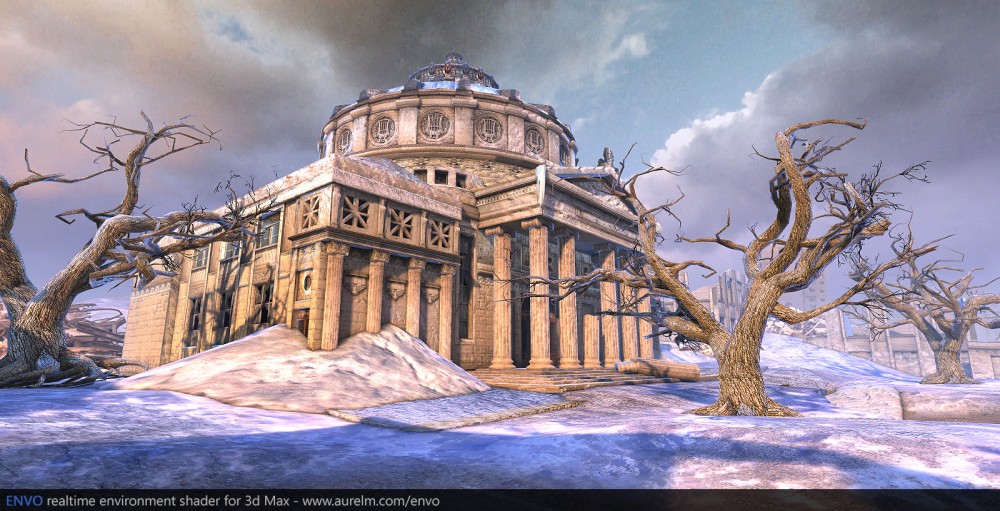
Note: This document is written one year ago and is not 100% up to date. A modified (and more technical) version was presented at GDC 2014 by Romain Sididris and it is the main technique used in Modern Combat 5. For those of you with GDC Vault access the presentation is here .
At the time it was I think the only game that used SSAO on a tablet or phone.Read More
My “just having fun” video of blood that I posted 2 years ago proved to be a HUGE success. I have licenced it to indie filmmakers, videographers, a documentary about Sherlock , a zombie film and a lot more. So that turned out nicely :).Read More
Some 2 weeks ago I started working on a little project. The idea was to take standard photos that I liked a lot and present them in a dynamic manner that simulates a camera. Now some day I want do do real camera work and timelapse but untile then this was the best I could do. I am not the inventor of parallax or the first one to use it, eve I have been ocassionaly using it since 10 years ago when I had to do a salami TV commercial using just a photo (the company had no budget for a video so they taught they could pay me a couple of bucks for something similar). Usually photographers do this in Adobe After Effects or similar and very few work with 3d software. I do that too ocassionally like this photo compilation of the protests in Bucharest:Read More