

Blog

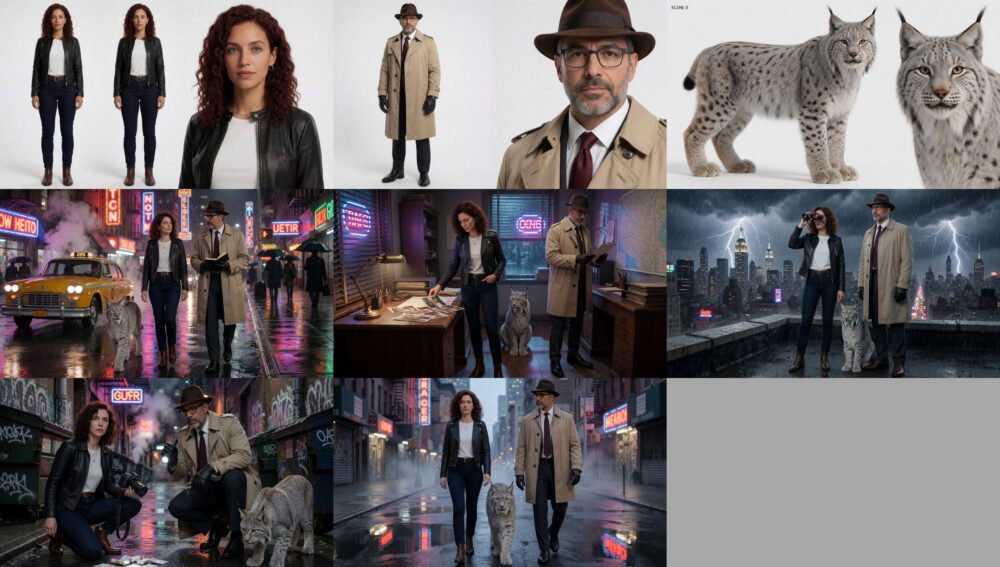
From Infinite Scene Images to Infinite Comic Books (ComfyUI first comic book generator from a simple story with consistancy using no references, LORAs etc).

A few days ago I published an article about a workflow capable of generating an effectively infinite number of consistent scene images using nothing more than a text description. The central idea was surprisingly simple: instead of maintaining consistency by carrying visual information from one generation to the next through LoRAs, ControlNet, reference images, edit models or image-to-image workflows, I continuously regenerated the description of the world itself. The previous image stopped being the source of truth. The description became the source of truth.

If you haven’t read it yet, you can find it here:

Read More

KREA 2 (and maybe others) infinite scene images with consistancy using description (Comfy UI workflow)

Krea 2 (and probably other image models): Infinite Character Consistency Using Descriptions + ComfyUI

Ok, so long story short, I saw a few workflows that enabled Krea 2 inside ComfyUI to generate a single image with four panels in order to keep character consistency. Nice idea, but for me there was one problem: resolution. Four panels inside one image is a no-go for the kind of work I do.

Then I had a different idea.

What if Krea is simply good enough that, with sufficiently detailed descriptions, it doesn’t need previous images at all? What if every scene completely recreates the characters from scratch?

So I tested it.

It works surprisingly well.

The characters remain remarkably consistent across an essentially unlimited number of separately generated images.

The workflow is at the end of the article.

Read More

What is God ?

Here is the English translation of your text. I have preserved the precise philosophical nuances, the poetic and meditative rhythm, and the clean structure we refined.

What is God?
The title is already wrong. Not because the answer is unknown, but because the entire question is constructed from local axioms of this level of reality.

"What" assumes that objects exist. "Is" assumes that existence is a fundamental category. "God" assumes that there is something separate from the rest of reality that can be pointed to by a word.

Three words. Three assumptions. Three limitations.
Perhaps that is all language does: create limits.
Perhaps every word is a border drawn across something that had no need for borders.

When we ask "What is God?", we already assume a separation between the observer and the observed. Between the one asking the question and that which is about to be described. But why?

Because that is how this level of reality works.

Here, objects exist. Causes exist. Effects exist. Truth and falsehood exist. Self and world exist. Yesterday and tomorrow exist. The possible and the impossible exist. All of these seem obvious. So obvious that we rarely ask ourselves whether they are fundamental or merely local.

If a fish were to invent philosophy, it would probably consider water a fundamental property of existence. Not because it has proof, but because it has never seen anything else.

Perhaps we are doing the exact same thing.

Perhaps existence and non-existence are just our water. So is truth. So is falsehood. So is time. So is identity. So are cause and effect. So is logic. Perhaps they are all rules of the game, not rules of reality.

Every time we have tried to define God, we used one of these rules. We said He exists. We said He does not exist. We said He is everything. We said He is beyond everything. We said He is infinite. We said He is the source.

But each of these statements immediately introduces other assumptions.

If He is the source, then causality exists. If He is infinite, then the finite exists. If He is everything, then the notion of totality exists. If He is beyond, then conceptual space exists. If He exists, then existence is fundamental.

Every answer hides a deeper question.
So we began to eliminate.

First, matter. Then information. Then existence. Then non-existence. Then truth. Then falsehood. Then possibility. Then impossibility. Then the observer. Then the observed. Then the relationship between them. Then time. Then space. Then totality. Then infinity.

And every time, something remained. Or so it seemed.

At one point, we arrived at a word that seemed less wrong than the others: Experience.

Not someone’s experience. Not the experience of something. But the brute fact of appearance. The fact that everything else seems to appear within it. Matter appears. Energy appears. The universe appears. God appears. I appear. You appear. The question appears. The answer appears.

But then, the same problem arises.
Experience is also a rule.

Experience already assumes a framework. It assumes that appearance exists. It assumes that there is something that can be called experience. It assumes a distinction between experience and non-experience. It assumes a difference. And difference is already one of the rules we are trying to transcend.

So, experience too must be eliminated.
Just like all the others.

Just like God. Just like existence. Just like truth. Just like time. Just like meaning. Just like meaninglessness. Not because they are false, but because they are local. Because they belong to a geometry of thought that may not be universal.

And then, what remains?
Nothing.

But "nothing" is also a category. So nothing remains. But even that is incorrect, because it assumes absence.

Perhaps there isn’t even anything to remain. Perhaps the idea of "remaining" is part of the same game. Perhaps this search does not lead to an answer. Perhaps it progressively dissolves the very tools with which answers are constructed.

But there is an interesting observation.

Our evolution, be it biological, intellectual, or spiritual, seems to have always been a process of digging.

We believed the Earth was the center of the Universe. We gave that up.
We believed our species was separate from the rest of life. We gave that up.
We believed time was absolute. We gave that up.
We believed matter was fundamental. Now, even that is no longer certain.

Every time we dug deep enough, what seemed fundamental turned into a particular case of a more general thing.

Perhaps this process is not over. Perhaps it will never be over. Perhaps the evolution of an intelligence does not consist in the accumulation of certainties, but in the progressive relinquishing of limitations. Not to arrive at the final truth, but to always push further the boundary between what we consider fundamental and what we consider derivative.

Perhaps the next step is to give up the idea that the real is fundamental and the unreal is secondary.

A dream is real as an experience, even if it is not real as an object. A fiction is real through its effects. An idea can change the world without being able to be weighed. Perhaps the real and the unreal are just two local categories of a deeper distinction we do not yet understand.

Perhaps we will have to give up the separation between observer and observed.
Perhaps we will have to give up the idea that truth must be binary.
Perhaps we will have to give up the belief that identity is something fixed.
Perhaps we will have to give up linear time.
Perhaps we will have to give up the idea that explanation is more fundamental than mystery.
Perhaps even the assumption that everything must be capable of being explained.

Not to abandon reason, but to continue exactly what reason has always done: to transcend its own limits.

Perhaps the destiny of intelligence is not to find the final brick in the foundation of reality. Perhaps its destiny is to discover, again and again, that what it thought was the foundation was just another floor.

Perhaps God is not the answer.
Perhaps God is the name we give to the last question before the very notion of a question ceases to be obvious.

Or perhaps not even that.
Probably not even that.

Ace Step 1.5 XL ComfyUI workflow for generating random tags, generate song and then give it a rating by using waveform analysis

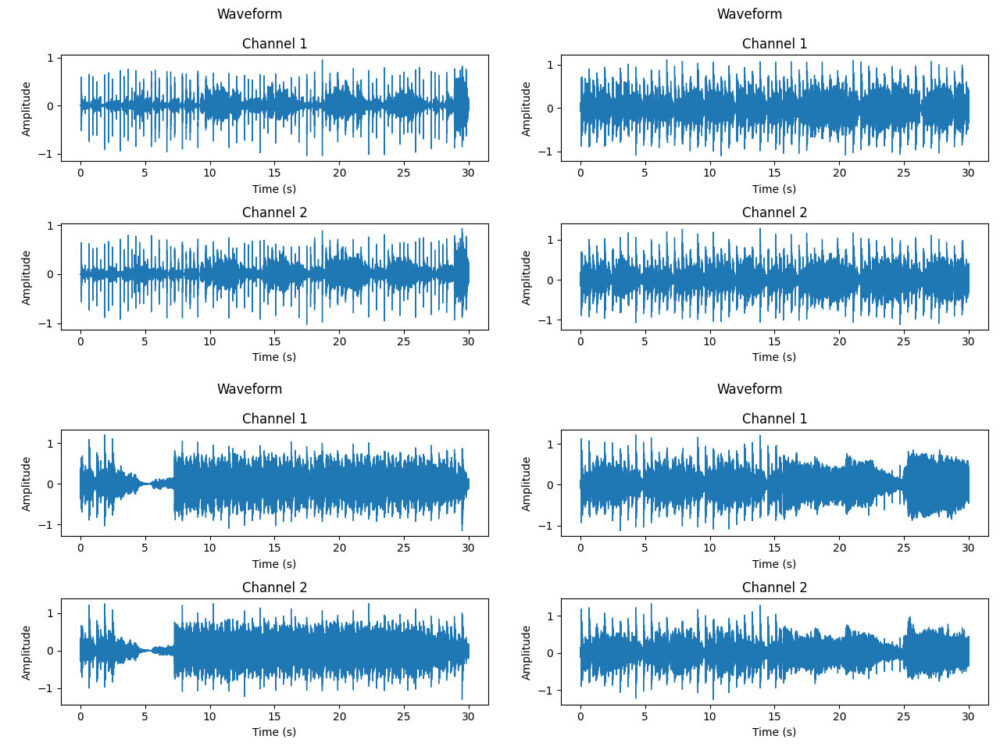
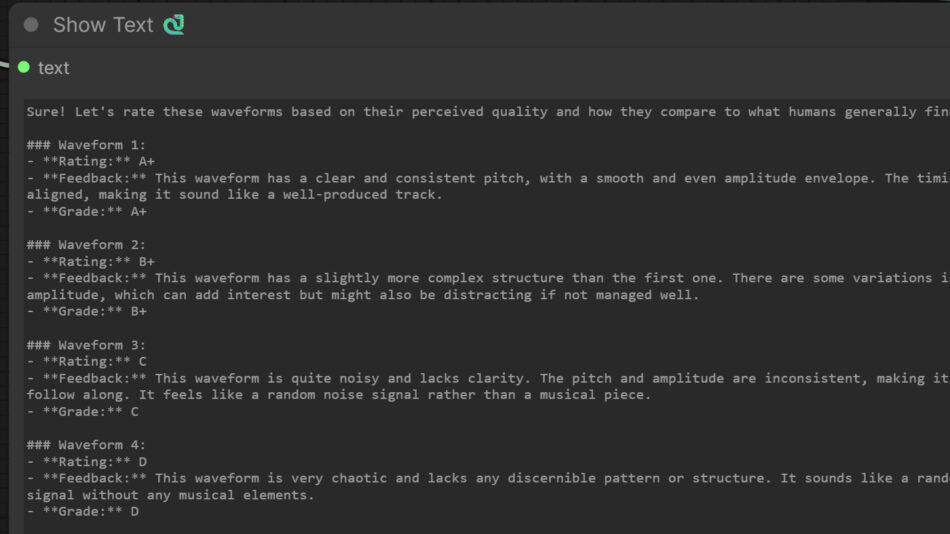
The idea came to me after sorting trough a lot of Ace Step 1.5 XL outputs and trying to find best styles and tags for songs. Why not automate the generation process AND the review process, or at least make it easier. So as usual I used Qwen LM and Qwen VL (compared to something like olama these ones run directly in comfy and do not require a server) to randomize the tags on each run, but more importantly to try and rate the output. How ? By converting the audio output into a set of waveforms for 4 segments of the song that I feed into Qwen VL as an image and ask it to subjectively look at the waveform and give it feedback and rating, rating that is used then to also name the output file. Like this. I am not sure it works properly but the A+ rated songs were indeed better than B rated ones.
Workflow is here. Install the missing extensions and add the qwen models.
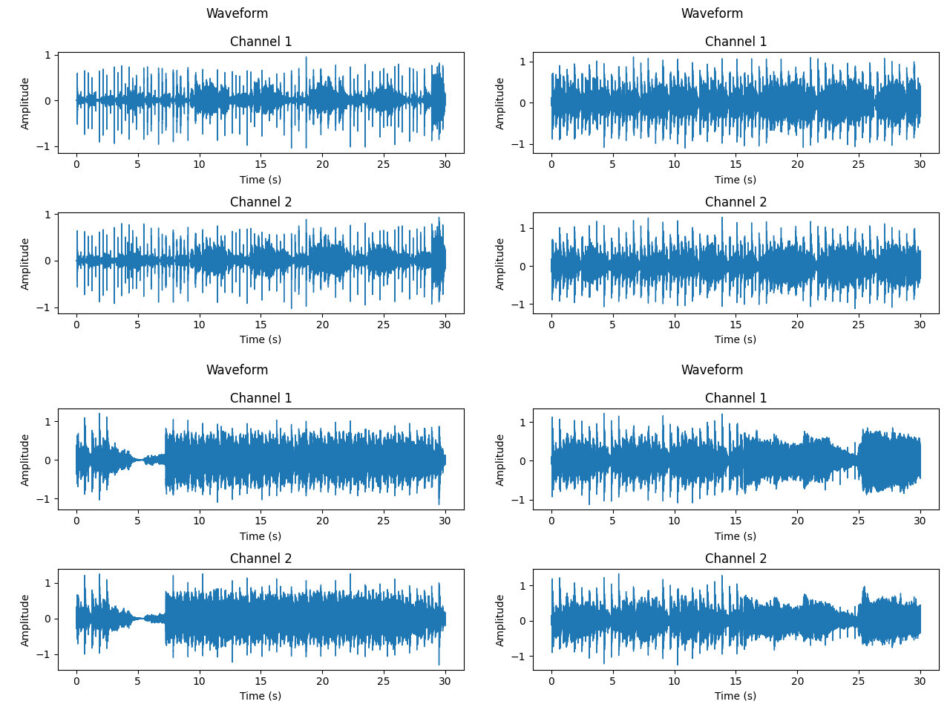
Ace Step WaveForm result
Ace Step rating
Read More

I hacked LTX2 to be used as a Multi Lingual TTS voice cloner

Took me a bit but I figured it out. The idea is to geneate a very low resolution (64×64) video with input audio and mask the audio latent space after some time using “LTXV Set Audio Video Mask By Time”. So the audio identity is set up in the first 10 seconds and then the prompt continues the speech.

The initial voice is preserved this way. and at the end you just cut the first 10 seconds. It works with a 20 seconds audio sample of the voice and can get 10 clean seconds. Trying to go beyond that you run into problems but the good thing is you can get much better emotions by prompting smething like “he screams in perfect romanian language” or whatever emotions you want to add. No other open source model knows so many languages and for my needs, romanian, it works like a charm. Even better then elevenlabs I would say. Who would have known the best open source TTS model is a Video model ?Workflow is here

Snails !!!

Made in ComfyUI using only local models (and uncensored of course).
workflow and usage is the one on this post, with reference actors that seem to work quite well or this direct link to the workflow .
embedded workflows and prompts in each asset (basically the whole related output folder from comfy).
Models used :
LTX 2.5 for Video and 2 shots with WAN 2.2 (explossions ones, at this LTX sux)
Flux Klein for images,
IndexTTS for voice,
Audio Ace Step 1.5 for music


WAN 2.2 + external actors > LTX-2 upscaler/refiner/actor reinforcement in ComfyUI

In my previous posts I talked about how you can use LTX-2 as an WAN upscaler/refiner and how to add external actors and elements references without img2vid (you need an empty scene without them and need them to come into the scene).
But why not both ? LTX-2 sux in action sequences and human interactions so the alternative at this point is wan 2.2 . But wan is lowres and has the same issue as ltx, no way for now to add actors in latent space.
So I used the same technique as for LTX2 to add actors to wan and then reinforce them in LTX-2 using the same method. Here are some results:


Idea :
Generate a very low res wan 2.2 video as reference for LTX but still pre-appending the actors and elements images at the beginning of the video,, then have the first image from the actual shot and referencing the characters from the beginning in the video. This step at 480P is very fast and good enough for characters interaction/movement coherence etc to be used as vid2vid in ltx-2. We save it at 12 fps so we can upscale with temporal upscaler in ltx.
Then in the LTX step we bring the same intro images but at highest resolution possible so ltx knows how the characters actually look like in maximum detail and paints them over the lowres wan video at at a 4x resolution. So the 480p video becomes 1440p in this case (but you can go lower if you don’t have the resources, I have an 3090 and 64GB system ram).
Both qwen image edit and flux klein were used for generating the actors, scene, zoom ins on the scene, removing characters etc.

Read More

LTX-2: Adding outside actors and elements to the scene (not existing in the first image) IMG2VID workflow.

This for me was the biggest problem with LTX-2, the inability to add characters from outside the camera without training a lora. So I finally managed to get something working (workflow).
please check out the other article where I expanded to wan2.2 and used ltx on top. much better for some cases like character interaction and action where ltx is a mess.

Read More

AI VS My Real Photos

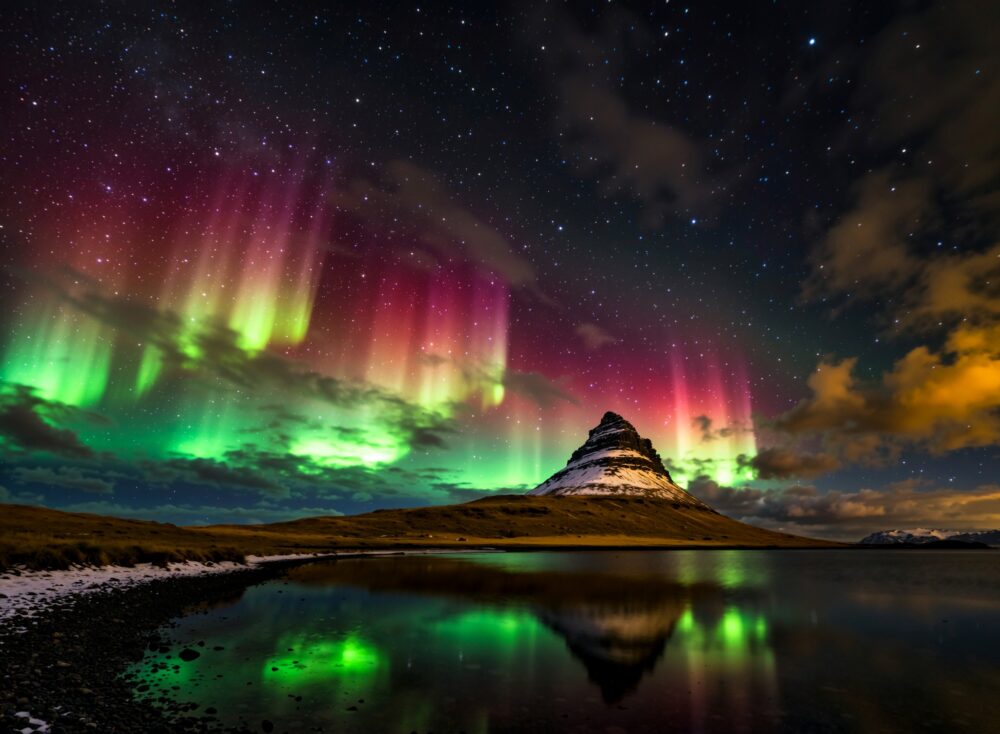
After I made my full photo archive available for free sume reddit users that I thank like NobodyButMeow created a Qwen Image Lora after my photos. What stroke me was that using the initial caption text the photos resemble the original a lot, as you can se bellow.
I have to mention that I am also using a WAN 2.2 refiner like in the workflow here .
The LORA is available here, no triggerwords needed.
Here is a sample prompt for the second image :
“A landscape at sunset, featuring a prominent, conical mountain in the foreground. The mountain is covered with snow, and its peak is illuminated by the setting sun, casting a warm, golden glow across the scene. The sky is filled with dramatic clouds, adding depth and texture to the composition. In the foreground, there is a small waterfall cascading over a rocky surface, partially covered in ice and snow. The water appears to be flowing gently, creating a sense of tranquility. The background reveals a vast, open landscape with more mountains and a body of water reflecting the sunset colors.”


Read More

Getting good results out of Chroma Radiance

A lot of people asked how they could get results like mine using chroma Radiance.
In short you cannot get good results out of the box. You need a good negative prompt like the one I set up and use technical terms in the main prompt like: point lighting, volumetric light, dof, vignette, surface shading, blue and orange colors etc. You don’t neet very long prompts and it tends to lose itself when doing so. It is based on Flux so prompting is closer to flux.
And the most important thing is the wan 2.2 refiner that is also in the workflow. Play around with the denoising, I am using between 0.15 and 0.25 but never ever more, usually 0.20. This also get rids of the grid pattern that is so visible in Chroma radiance and wrong hands and fingers.
The model is very good for “fever dreams” kind of images, abstract, combining materials and elements into something new, playing around with new visual ideas. In a way like SD 1.5 models are.
It is also very hit and miss. While using the same seed allows for tuning the prompt keeping the same rest of the composition and subjects changing the seed radically changes the result so you need to have pacience with it. Imho the results are worth it. Also sometimes you need to correct things in photoshop using generative fill.
The workflow I am using is here .
Here is a small gallery :

Read More

Dataset Generator and Auto Captioning using Qwen

Because somebody on Reddit asked how could he caption a dataset for Qwen Image and mentain consistancy I made a small ComfyUI workflow that uses Qwen 2.5 VL 7B Instruct to autocaption the images in a folder, name them, caption them and save them all in another folder. It should be straightforward to use but you will have to manage the missing nodes and models yourself

The workflow is here .

Read More

Wan 2.2 Lightning LORA 3 Steps in total workflow

This video was created using a 3 steps total workflow in 720p, around 25% faster than normal 2 steps per model workflow. The idea was that since the first high noise model is high noise anyways, there may be a configuration of parameters that only needs 1 step for it. It seems to work but I have mention that from time to time the image gets blurry and have not tested it other with images from THESE series witch have a very particular style and the motion is very still.

Here is the workflow, you can try it yourself. Note that you need the lighting loras and the Wan2.2 I2V Models (I am using GGUF versions). Any missing nodes should be downloaded using the manager.
https://aurelm.com/upload/ComfyWorkflows/Wan_22_IMG2VID_3_STEPS_TOTAL.json
Here are 2 videos made with this trick:

Read More

Behold, the Qwen Image Deconsistencynator !!!! (Or randomizer & Midjourneyfier)

Qwen image has been getting a lot of unjustified heat for something wonderful (consistancy when updating prompts). Now I understand why some people want that random factor, finding the perfect shot by just hitting generate so I made this custom workflow that uses Qwen24VL3BInstruct to generate variations of the initial prompt, improving it and simulating the “old ways” of doing things.
This uses Qwen Image Edit as base model for generating image, but the initial prompt tweaking nodes in the left can be copy pasted to any workflow. Link bellow and samples + youtube tutorial:

Workflow for getting Midjorney like images
Version 2 (with Borealism LORA)
Workflow for SRPO Refiner
Edit: Changend the workflow and updated with better prompt generation. There is now a midjourneyfier boolean at the beginning of the left group so you can either diversify the prompt like the first example with the wires below or midjourneyfi the hell out of it like the later photos.

Read More

Proper photo AI upscaling in 2025

As a photographer and AI enthusiast and technical artist I experimented everything possible long before midjourney and such came along (back in the days of discu diffusion in 2021). So I got a head start. Of course as a photographer I was very interested on how to use it for photography, and upscaling in this case. All commercial tools at this point suck for me.
But working with open source tools like comfyUI I finally managed to get something incredible. Example here : (first is 100% crop of tohe eye in the last image, second is upscaled version of the eye and then zoom out to original).

Read More